
Olympics @ Tech
1996 Olympics @ Georgia Tech
Explore how Georgia Tech and the greater Atlanta area was transformed by the hosting of the 1996 Centennial Olympic Games. From inception to the closing ceremony, scroll down to read stories from campus and find out how GT alumni helped to make it all happen!
The Bid
Prior to the Olympics, Atlanta was known as a city for business and transport. Travelers flew in as a go-between to more “destination” locations, with the international community often confusing it with Atlantic City in New Jersey.
Prior to the Olympics, I would find it very difficult to believe that anybody from another country would look at Atlanta as a tourist destination.
- Jacob Elsas
Many in Atlanta wanted to change that, and as the idea to bid for the Olympics was gaining traction among city leadership, Georgia Tech President John P. Crecine realized that the university could play an instrumental role in the Games.
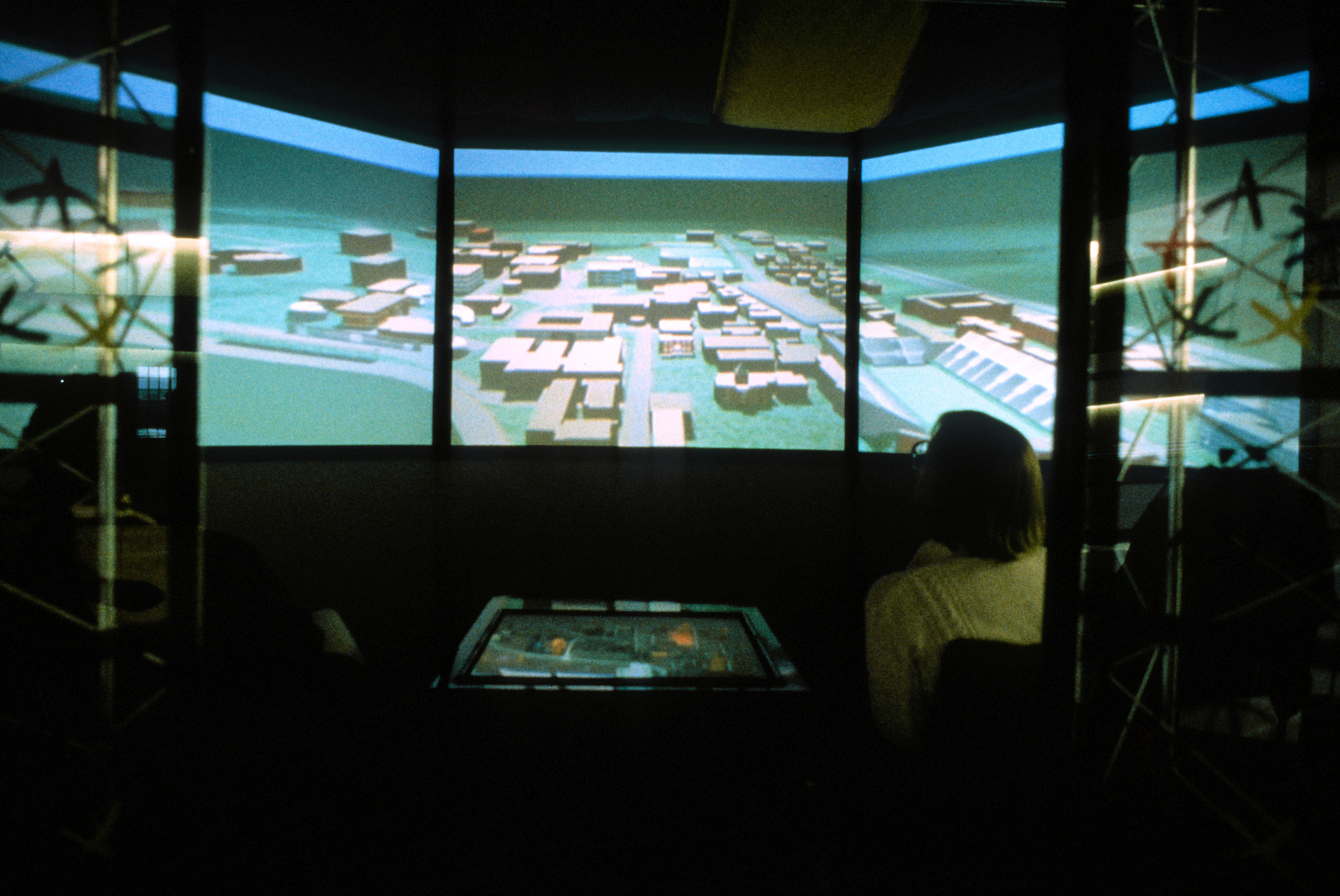
Pushing for Tech’s involvement, he commissioned the Georgia Tech Research Institute, along with GT’s Interactive Media Technology Center, to produce a futuristic vision for what the Olympics could look like at Tech. The resulting presentation combined virtual reality with cutting edge computer graphics - powered by GT’s supercomputers - in a way that wowed the International Olympic Committee and secured the win for Atlanta.
Atlanta Wins
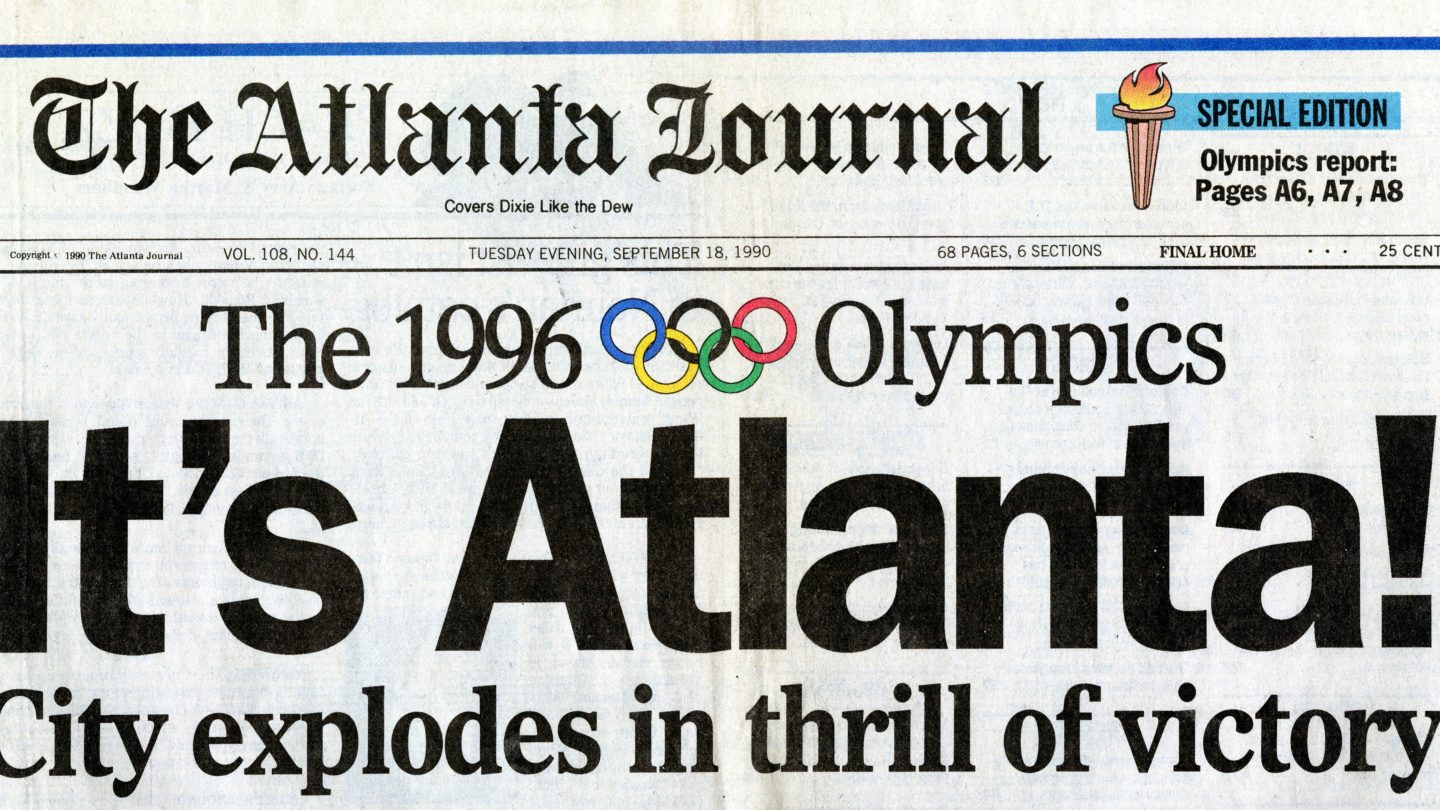
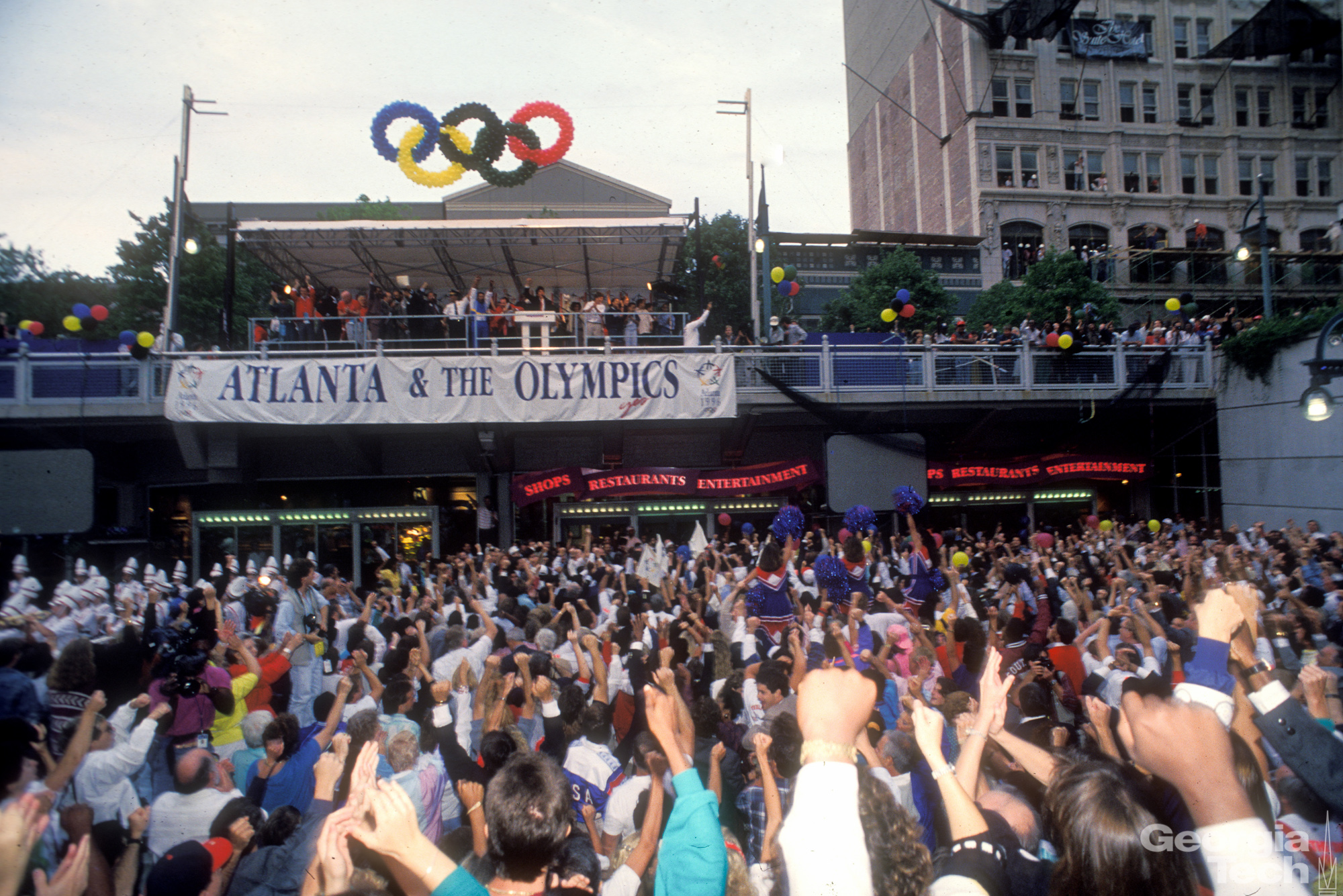
On September 18th, 1990, the IOC made the announcement - Atlanta was to be the host of the 1996 Centennial Olympic Games. Immediately following the declaration, the city erupted with cheers and elation. Those present recall a certain unifying feeling in the air:
Oh, we were jumping up and down! … I remember taking my son, who at this point was one, downtown to Underground Atlanta at the time. They were having an impromptu celebration about getting the Olympics.
- Grace Rembert
But along with the excitement came the nervous anticipation, since hosting an event as large and populated as the Olympics was no small feat.
We were the first consultants brought on board by ACOG after they won the bid. Billy Payne and Eddie Frazier and all had said when they were sitting around discussing - ‘This is wonderful… Now what do we do?'
- Jeff Floyd
The Planning
Being the first privately-financed games in the history of the Olympics (as opposed to state- or country-sponsored), the Atlanta Committee for the Olympic Games and all participating parties were starting the planning process from scratch. And compared to other Olympics, they wanted to do things far more efficiently, monetarily and otherwise.
ACOG set an initial budget of around $1.5 billion for the total cost of the games, around $500,000 of which was allotted to the actual brick-and-mortar construction. If you compare that with Barcelona’s 1992 Olympics with a total budget of over $8 billion, you can see the challenge faced. So what did Atlanta do?
One of the things that we were told we needed to do for the venues [was] to keep planning for maximizing the temporary facilities, because we don’t know how much money we’re going to raise.
- Jeff Floyd
So, facilities were planned to be either temporary or permanent, based on the demand for each building in their specific community after the games ended. For every one of the 28 venues used in the games, the details of each space was meticulously thought out, from the traffic flow of people to the needed security, transportation, and other logistics, to the long-term building use.
The City Transformation
While many temporary facilities were built and taken down as part of the Olympics, those with the most lasting impact are the permanent ones, which continue to display the lasting legacy of the games in Atlanta.
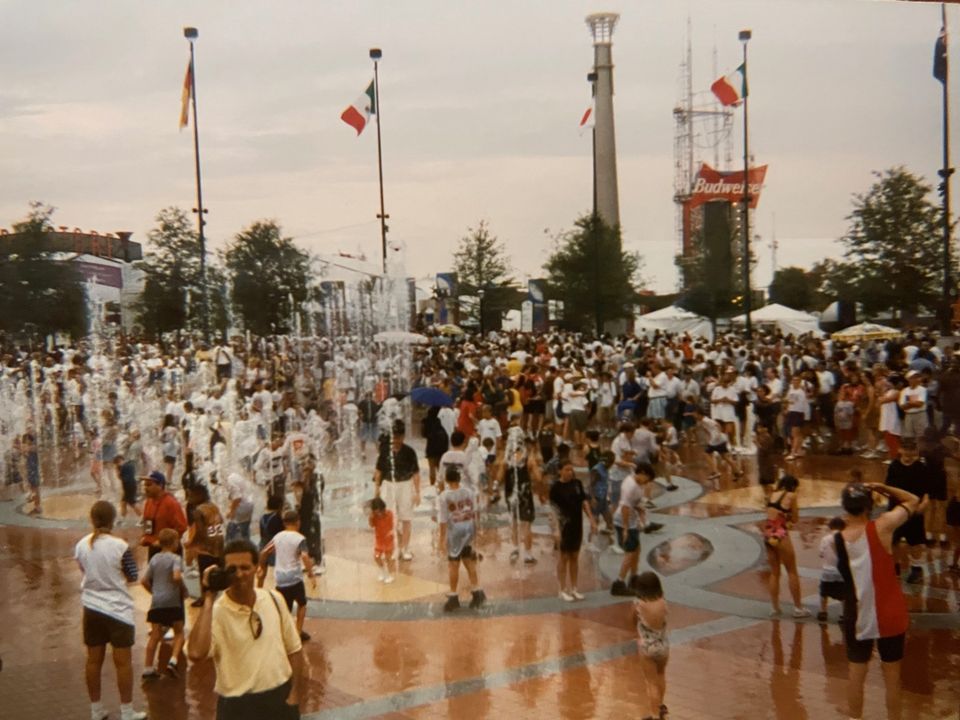
Though not permanently altered to the extent of previous Olympic games, over $500,000 was spent on urban redevelopment to improve parks, housing, and transportation in the lead-up to 1996. Along with 9 new athletic venues, the most notable of the constructions was a more community-oriented place, Centennial Park.
Originally planned as a water-centric gathering place, Billy Payne of ACOG envisioned the site as a place for Olympic attendees to simply come and socialize, without having to pay to enter an athletic venue. Realizing that the plot of land right next to ACOG’s offices was vacant and perfect for the park, they jumped on the planning before even receiving the go-ahead to buy the land, coming up with a conceptual design in only three weeks.
I think it’s truly the greatest legacy of the games … what it’s done for Atlanta as the magnet center [of the city].
- Jeff Floyd
The Campus Transformation
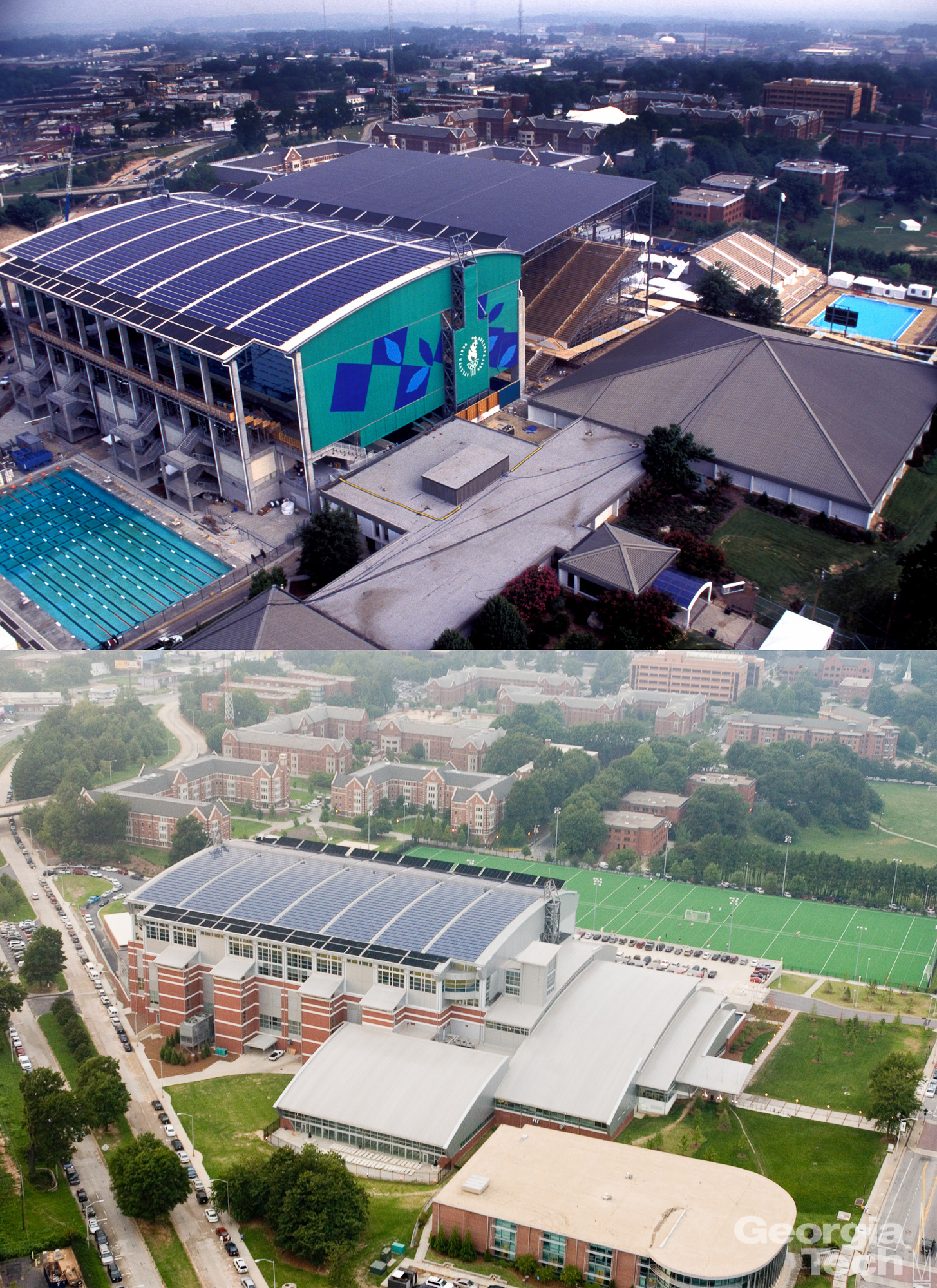
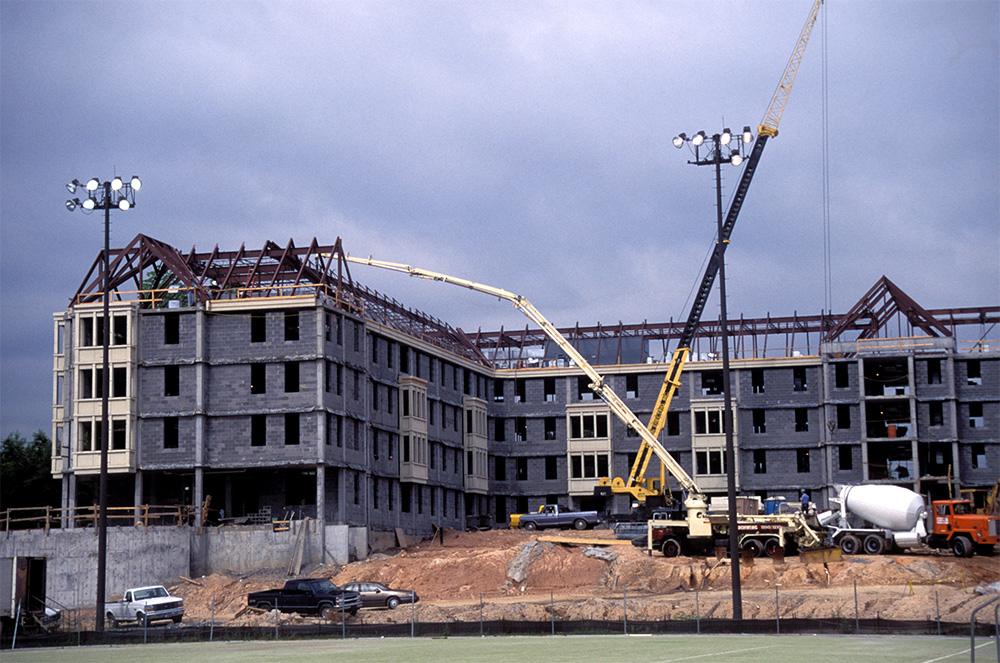
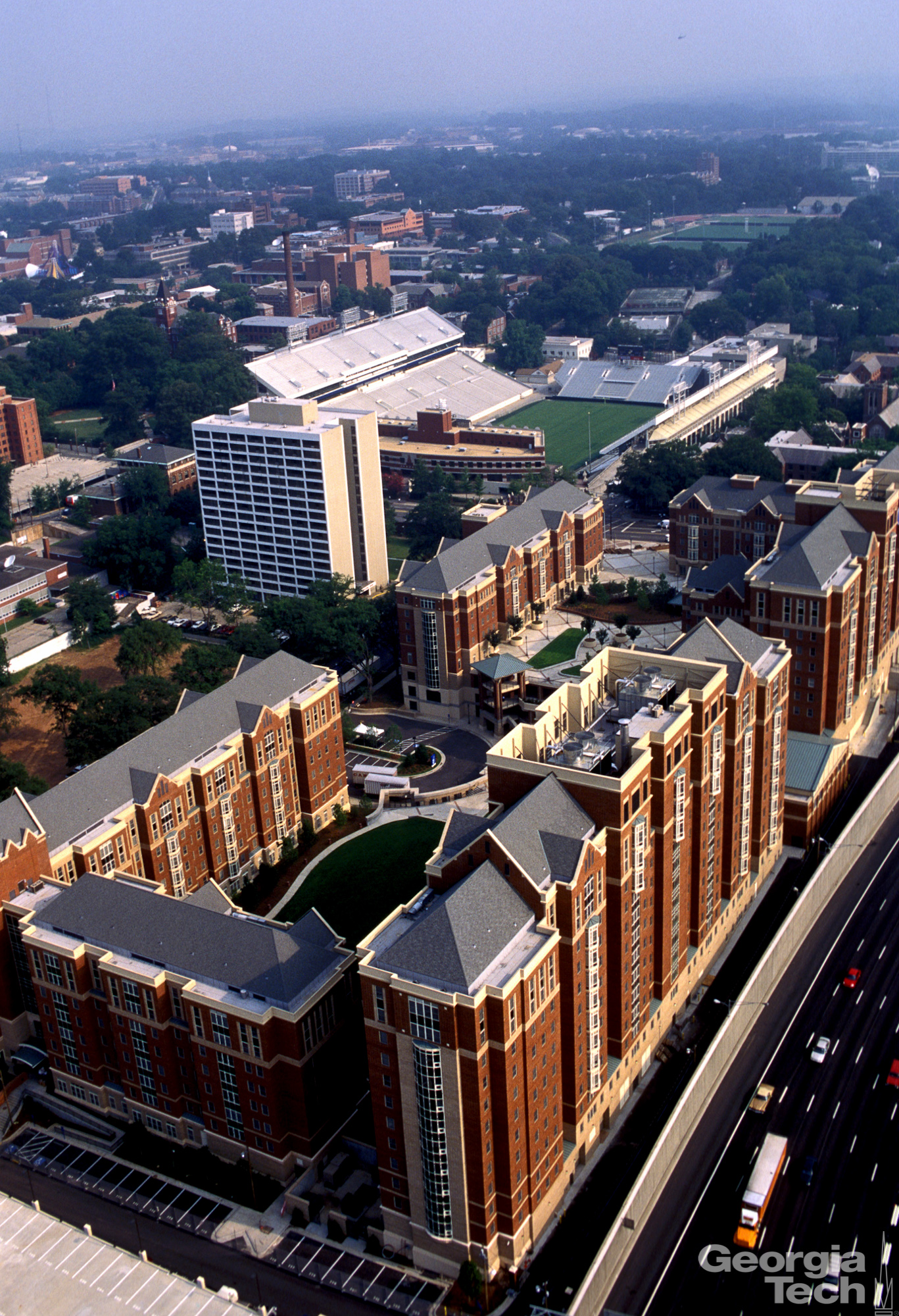
At GT, there are several facilities that were built or refurbished exclusively for the games - what we now know as McCamish Pavillion, the Campus Recreation Center, and North Avenue Apartments would not be here if not for the Olympics.
The North Avenue Apartments, built to house nearly 10,000 athletes, was originally gifted to GSU. But a later deal was struck in 2007 to transfer the housing complex to GT, due to its proximity. This timing was serendipitous, as it coincided with the beginning of the HOPE scholarship program, meaning that Tech had a nearly doubled housing capacity to provide for the rapid increase in student population.
Every day, I could see how that [the Olympic Village construction] was transforming the landscape. It was fascinating to watch.
- Bryan Jacob
As part of this transformation, many areas directly surrounding Tech (much of which were in deteriorating conditions) were improved or renovated. This includes the land that is now home to Tech Square! These adjacent changes, along with the upgrades to GT itself, forever changed the university and propelled it into what it is today.
Students at GT
Students at the time were faced with a lot of inconveniences in the lead-up to the Olympics. Given that the preparations spanned over 5 years, students needed to navigate around construction-heavy areas and closures as different facilities were built. And with high security surrounding the Olympics itself, most students/staff were unable to see the result of these years of effort.
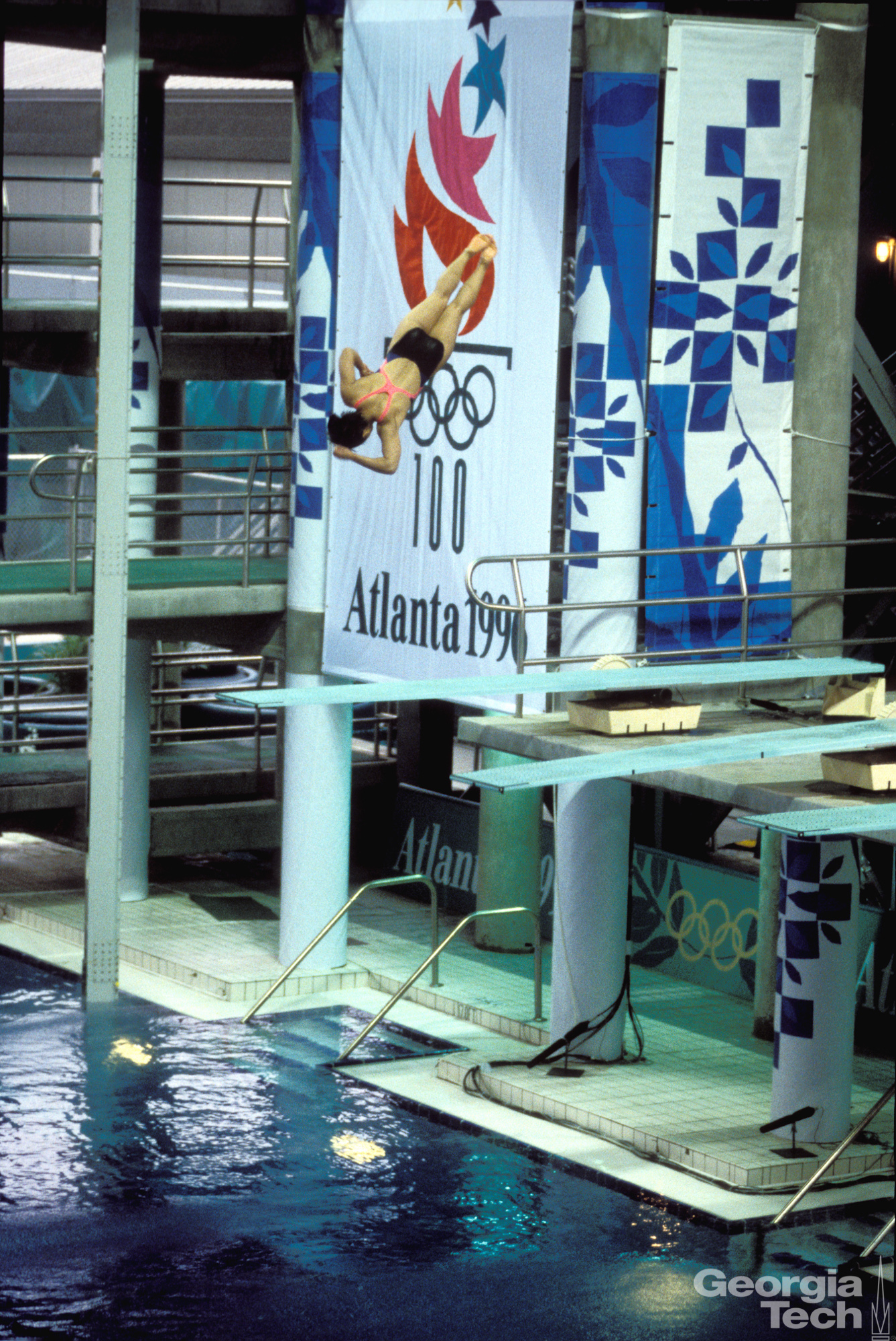
For many however, these challenges did not outweigh the pure excitement of hosting the Olympics. GT hired coordinators and hosted programs to support the student body through this time as well - their main focus on ensuring that campus operations ran smoothly and morale ran high, despite the interruptions. One notable SGA-initiated event even raffled the chance to be the first person to jump from the high dive once the Aquatic Center was completed!
[In reference to the feelings on campus] You know, things were starting to change … We already had two years of knowledge that the next Olympics beyond Barcelona would be in Atlanta, so things were starting to happen.
- Bryan Jacob
Athletes and the Olympic Village
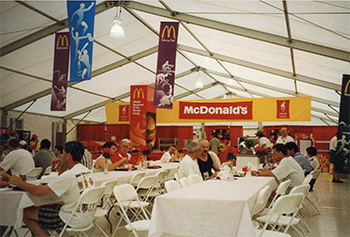
Athlete life during the games was a very unifying experience. In the Olympic Village, you could walk by or have lunch with celebrities and competitors alike! Though it was not always a cordial thing, spending time in the Village allowed athletes to experience their sport in the most global of settings, often making friends along the way.
If you go eat in the Village dining halls, [you could see that] it was a co-mingling of cultures from around the world.
- Bryan Jacob
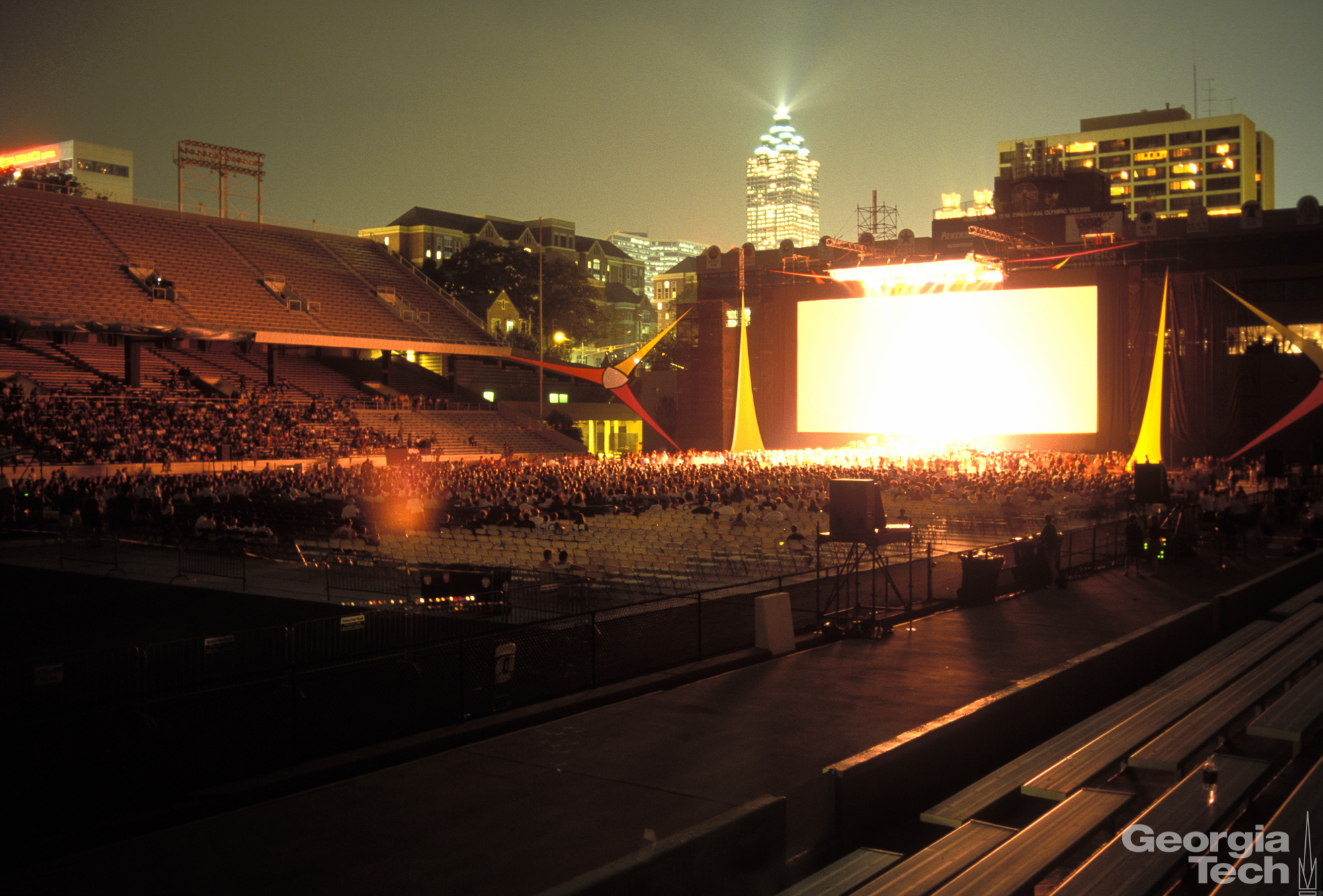
After the events would finish for the day, there were plenty of events for the athletes to enjoy - concerts, movies, parties, and more. There was also a lively pin exchange, in which athletes, volunteers, and other Olympic affiliates were given a supply with their association or country logo, and all would swap in an attempt to gain a variety.
You could get [the pins] from the vendors… sometimes people would just give them to me. I don’t think I ever bought a pin, I just ended up with dozens and dozens of them.
- Jacob Elsas
Atlanta's Olympic Legacy
As a result of the Olympics, Atlanta secured itself on the world stage as a center for sport and a travel destination. The development that went on in prep for the games served as a catalyst for further growth as well - especially in the Centennial Park area, where attractions have since brought in over $3.2 billion to the city.
These changes benefitted many communities, but as with all development of this nature, it also pushed out those who could not afford to stay. In lower-income and historic neighborhoods, like the Techwood Homes public housing project (what would later become the Olympic Village) and others like Cabbagetown (east of campus and the city center), residents had to leave for the Olympics themselves, and most were not able to move back.
A lot of beautification went on … Cabbagetown changed rapidly after the Olympics. I would say not necessarily in the best way, because a lot of inhabitants of a neighborhood got displaced by gentrification.
- Jacob Elsas
Preserving the 1996 Olympics
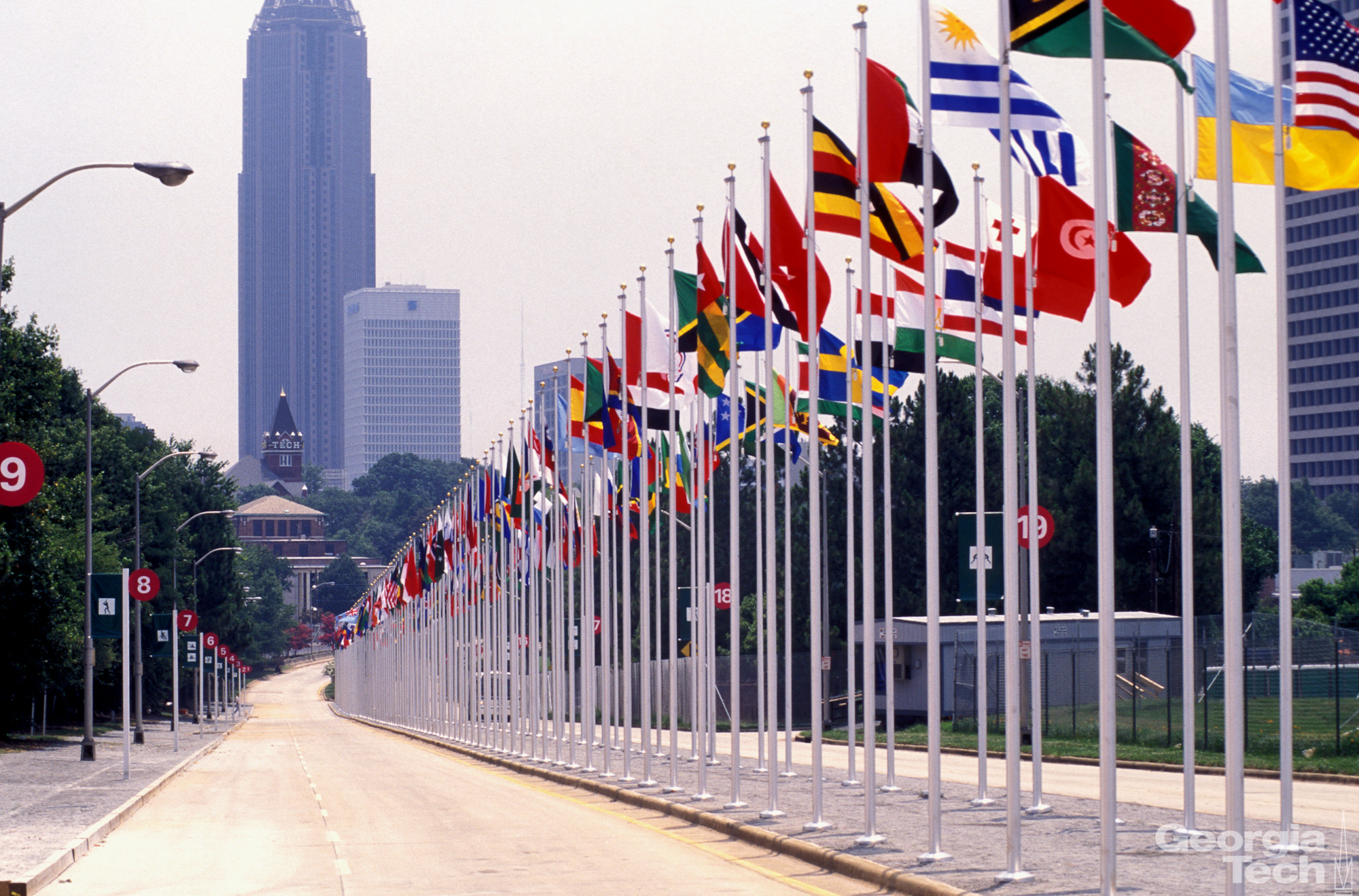
Georgia Tech has worked since the start of the ACOG planning process to archive materials related to the Olympics at GT. GT Library Archivists continue to work with alumni and donors to compile and store material like the photos displayed on this page, as well as materials used as research sources for the above content.
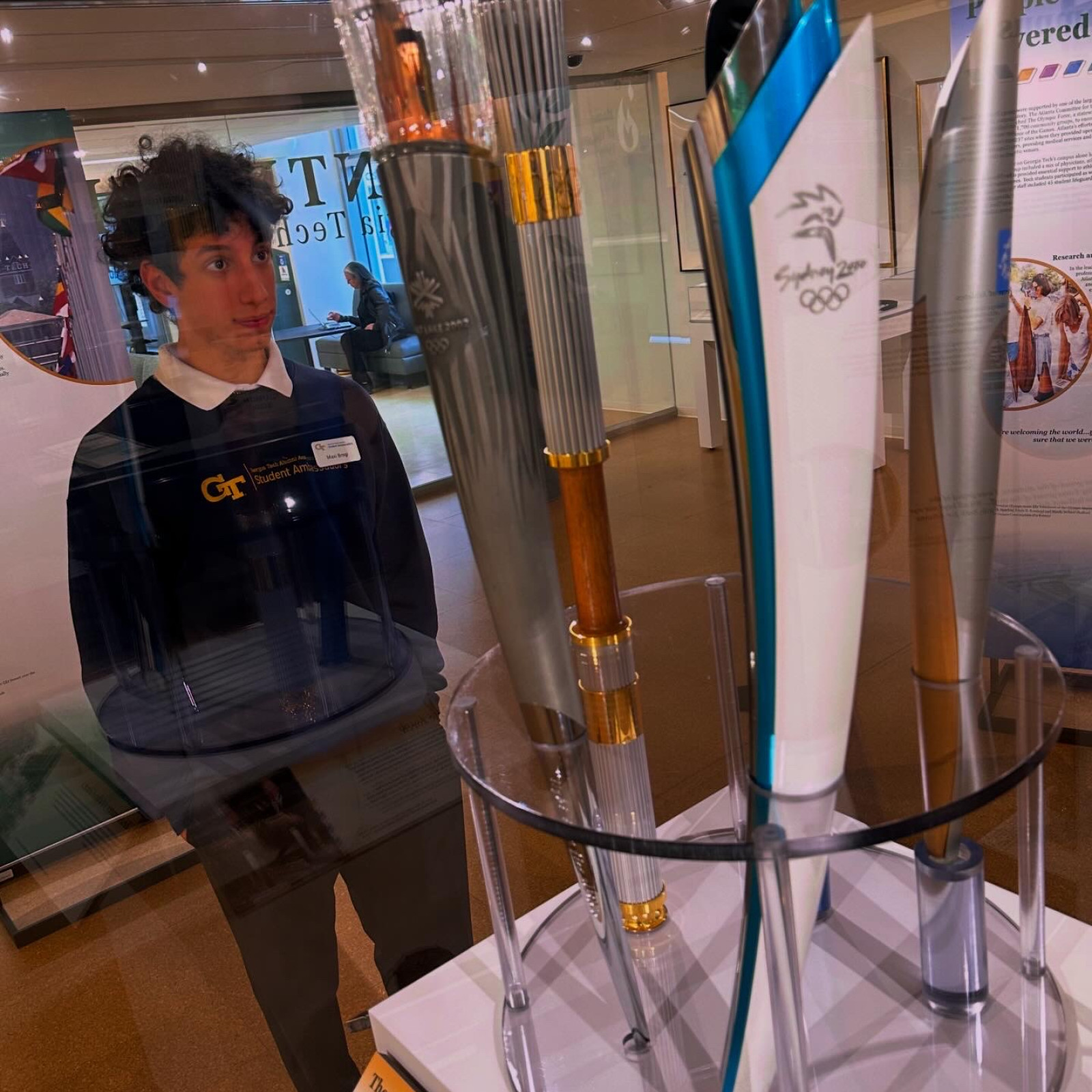
This year marks the 30th anniversary of the 1996 Atlanta games, so as part of their preservation and outreach programs, the GT Library is showing “Centennial Summer: Georgia Tech’s Olympic Legacy” in the Exhibit Gallery of Price Gilbert until mid-November. Be sure to check it out if you’d like to learn more!
Acknowledgements and Notes
Thank you to the following alumni and friends of GT, who lent their stories and voices to this project:
- Grace Rembert, IE ‘83 alumni and participant in the Atlanta HOST program, where a coalition of local Atlanta churches and volunteers provided free housing for Olympic athletes.
- Jeff Floyd, Arch ‘70 alumni and founder of Sizemore Floyd Architects, a leading architecture firm that helped to make the 1996 Olympics possible.
- Bryan Jacob, CivE ‘93 alumni and 2-time Olympian, who competed in the 1996 games as a bantam- and featherweight weightlifter.
- Jacob Elsas, historical preservationist at The Patch Works Art & History Center and friend of GT.
Please note as well that this is not a complete, nor entirely comprehensive, timeline of the 1996 Olympics at GT. It is a work in progress, which we will continue to improve in further semesters. We encourage you to research further if interested!
Want to contribute to this project? Contact aroemer3@gatech.edu for details!